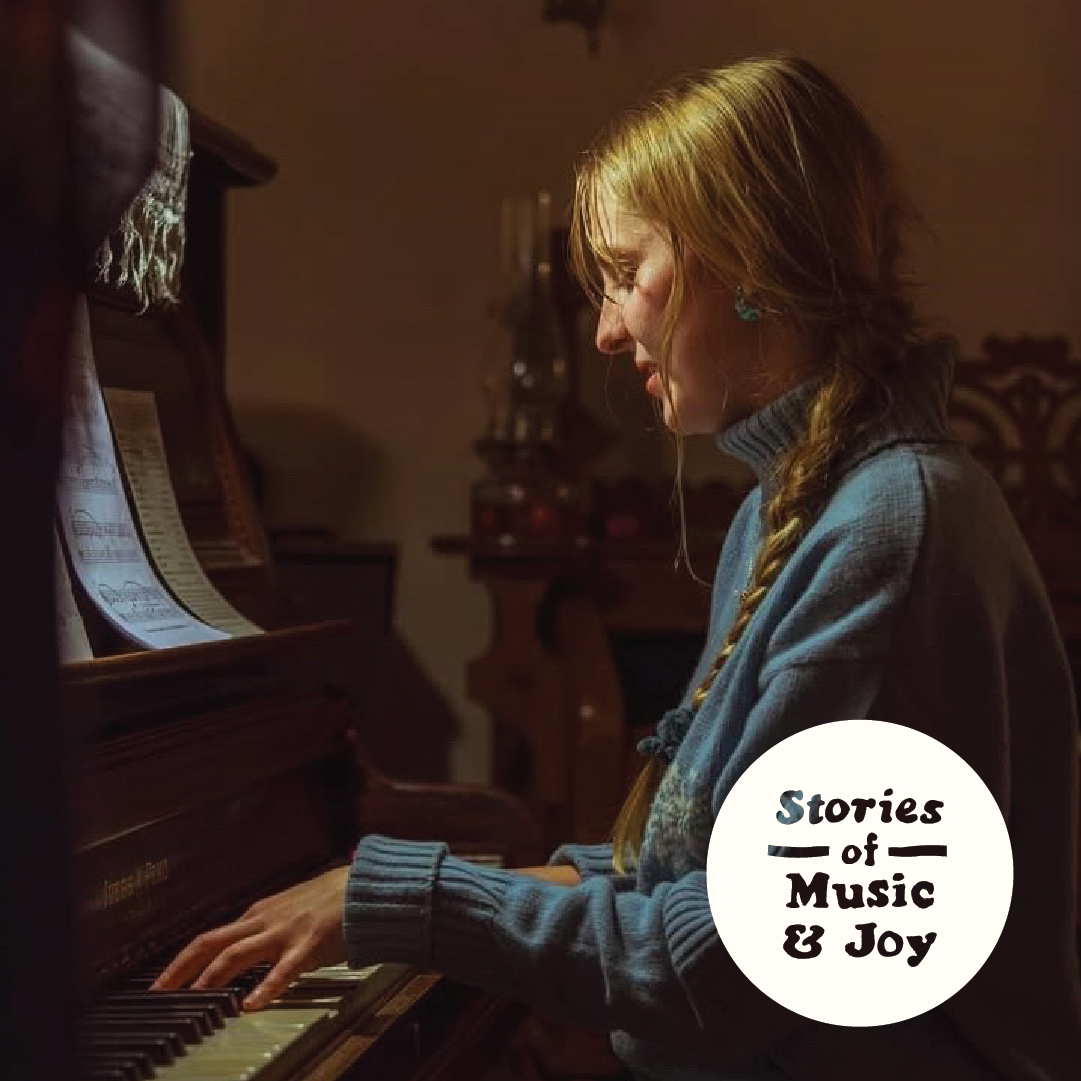
Stories of Music & Joy

Stories of Music & Joy: Joe and Leila McVeigh

Photograph by Beth Duquette

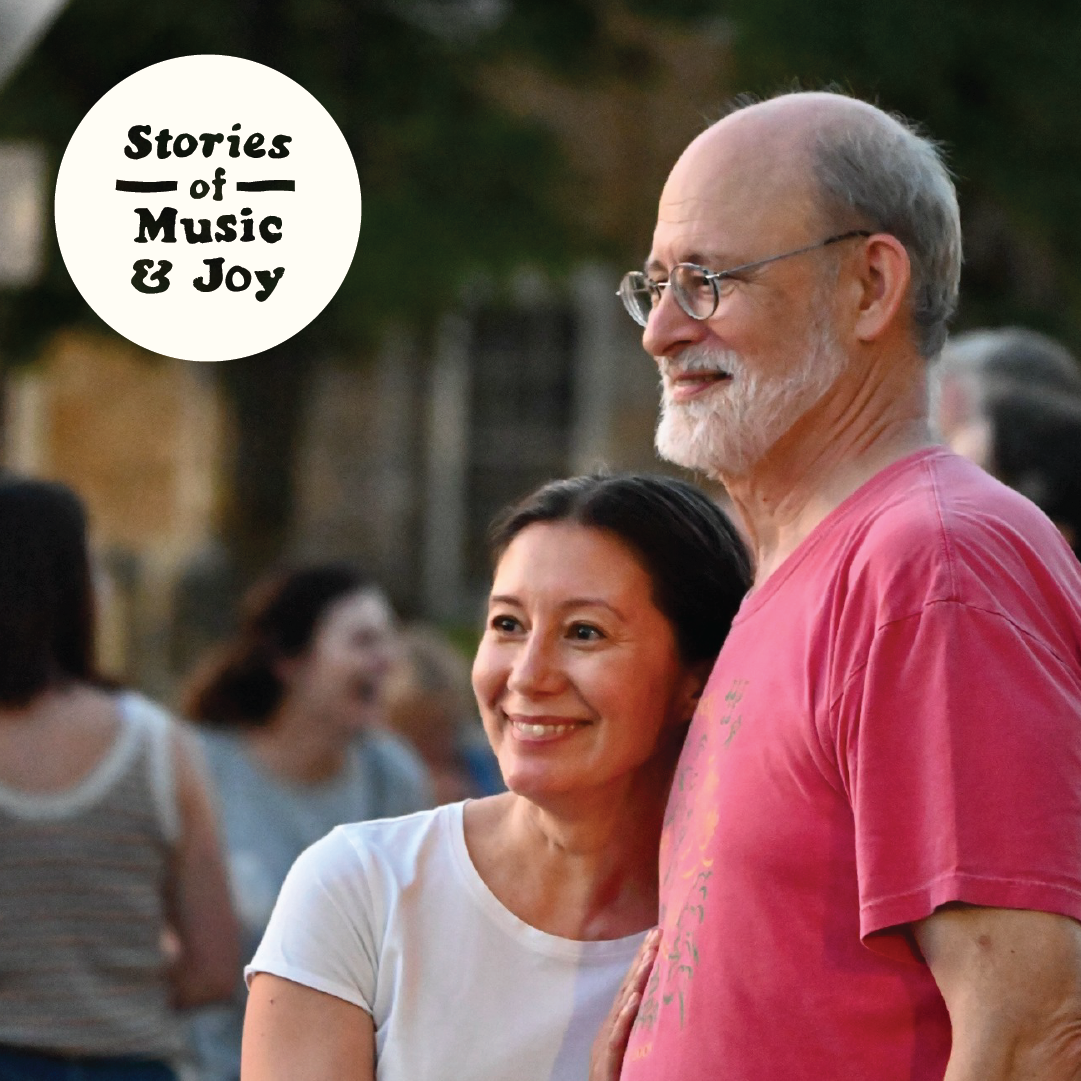
Joe and Leila McVeigh

As the Middlebury Community Music Center celebrates ten years of serving the community, we are excited to share stories from our community about how MCMC has been an integral part of their musical journey. Joe and Leila McVeigh are two members of the community who have seen the center grow from its earliest days to the thriving hub it is now.

The McVeigh Family first started working with Sadie in 2011 when they signed their child Nat up for piano lessons. Nat naturally gravitated to jazz band in middle school, starting off on keys. Halfway through seventh grade, Nat asked to learn the saxophone. Summer lessons with Bear accelerated Nat's progress out of the beginner stage, and tenor sax quickly became their primary instrument. Nat was excited to experiment on multiple instruments, and returned to Bear for some trombone basics the following summer.

Working with Bear turned out to be transformative for Nat, and created a safe and encouraging place to develop as an improviser. As their studies continued, Bear wanted to start a new class that would create small ensembles for students of different instruments to play together. At first, the class only had three people enrolled–Nat and two brothers–but MCMC kept the class going and supported Bear’s vision of what would grow into a professional jazz group.

As Nat’s confidence as an improviser grew, they were exposed to more opportunities to perform and develop. Whether in festivals, school, or professional gigs around town, Nat and the Back Porch Jazz Group created a path through their music studies that led them to Berklee College of Music. 

As Nat has grown as a musician, Joe and Leila have watched MCMC evolve in parallel. As Nat was finishing high school MCMC began offering Jazz Camps in the summer and then was able to hire Nat as a counselor after they went to college. For the McVeigh Family, what makes MCMC special is its accessibility for musicians at any level to engage with the organization.

Joe calls MCMC a “small organization with a big reach,” adding, “If you look at the variety of lessons that are offered on so many different instruments, both individual or in group settings, there’s an amazing array of offerings.” This commitment to providing both a depth and breadth of musical experiences supported Nat’s growth and continues to offer ways for them to remain engaged with the community as an adult.

The McVeighs are now seeing that commitment grow outwards to include other businesses and organizations in the community. MCMC now partners with the local library to provide free concerts, churches, and community spaces for salons and events, and local arts organizations in designing and running interdisciplinary arts summer camps. 

All of these collaborations add up to tangible impacts in shaping a thriving community for Joe and Leila. “I think that in today's fragmented world,” Joe reflects, “it’s all about connections, and the more connections we can make, the better. And what better way to connect than with music and through music.”

One challenge they foresee for the Center is related to its growth and expanding connections with the community. Joe and Leila both recognize the limitations of a program limited to just one physical space. MCMC’s mission of providing access to inspiring musical experiences to more and more members of the community is already outgrowing the four walls of the house on Main Street, bringing in community partners like the nearby Town Hall Theater to expand musical offerings and opportunities. 

This growth creates an exciting new chapter for MCMC after its first decade of work. With new connections and collaborations with other businesses and organizations, MCMC’s vision and mission are spreading to new venues and taking new shapes in the community. What makes MCMC special to the McVeigh Family is its inclusivity and diversity of offerings that make it accessible to so many different types of potential students.

Leila sees this mission as being fundamentally driven by passion and care. “It’s really blossomed over the past decade, and it’s been really amazing to watch the love and the thought and the work get poured into MCMC to make it what it is.”

Stories of Music & Joy: Simon Broucke

Photograph by Caleb Kenna

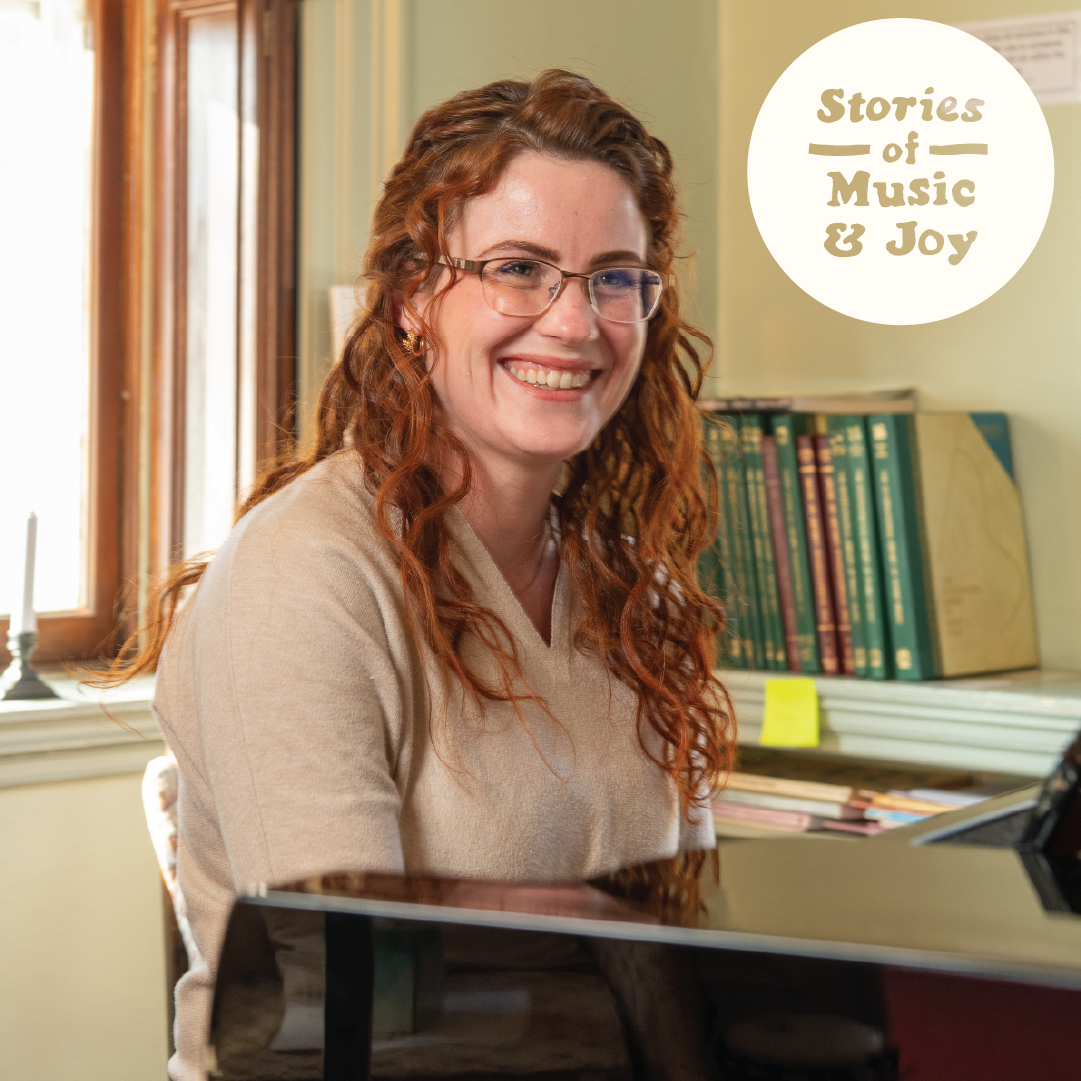
Simon Broucke

Celebrating our ten year anniversary, we are excited for the opportunity to look back on some of the people who have shaped and been shaped by the Middlebury Community Music Center (MCMC). Simon Broucke was one of the first students to take lessons at MCMC, and his journey through the program offers an example of the transformational power of music. 

Growing up in Middlebury, Simon started piano lessons a little late by his standards - at age 8. By the time he met Sadie Brightman, he had hopped around between a handful of teachers. Before beginning his work with Sadie, Simon reflects that he would get distracted from practicing and “didn’t have a strong sense of… how I was working to improve.”

Meeting Sadie in 2011 pointed Simon in a new direction. In eighth grade, Simon wasn’t aware of the vision of a home for music education and community in Middlebury that Sadie was beginning to develop. As a teacher, Sadie believed that music should be less about achieving a perfect product and more about creating a unique process, tailored to each individual student. She envisioned MCMC as a place that reflected this commitment and created new opportunities for potential students to find their unique musical expression. 

Simon quickly grew to love his lessons with Sadie and was inspired by the mission of the Center. With Sadie, he not only learned to see his practice as a pianist differently but also became engaged as a student worker at MCMC, which exposed him to new conceptions of performance and career which would have a lasting impact on him.

Simon recalls that Sadie worked with him to develop “a healthier relationship to the idea of practice, performance, and musicianship in general.” From this patient and supportive practice, Simon was encouraged to take his musicianship and creativity more seriously. His musical study with Sadie expanded to include original compositions and ensemble performances as well as work as a camp counselor and administrative aide to the organization. It was this work that Simon sees as having a direct impact on his work today, as a freelance composer in New York.

Now, Simon traces the roots of his professional journey to the types of work he was invited to participate in at MCMC. He believes that MCMC provided opportunities that “led towards those kinds of things that made me the most excited” and allowed his passion for music to grow into a sustainable career. 

Initially, MCMC helped Simon overcome his insecurities about pursuing a musical education. He remembers shaking before recitals, and not liking playing music. For Simon, learning how to decouple his enjoyment of music from self-judgment led him to pursue new avenues of performance, including chamber ensembles and bands. Discovering the world of music that incorporated collaboration would have a lasting impact on Simon’s creative and professional growth.

This community orientation and collaborative approach has been reflected in MCMC’s growth as well. Remaining an active member of the community via social media and creative collaborations, Simon has observed how MCMC is working towards “bridging the gap” between offering a wide range of individual, one-on-one instruction opportunities and the creative and collective opportunities that are available when those individuals are brought together.

Simon believes that the community element is what distinguishes MCMC from traditional music education experiences he has had in the past. Approaching ten years in the community, MCMC has shaped “an entire generation” of students who, like Simon, have a sense of music as something for everyone and an art form that brings people together. Simon believes that MCMC rejects the idea that music can be “an isolated, gatekept, or in any way exclusive thing,” and adds that “anything that pushes against the sense of music education and creativity being this exclusive thing for a chosen few… I think that’s such a net positive for the world and the arts in general.”

Looking towards the next ten years, Simon is “excited to see how MCMC is able to keep reaching out to people, hopefully in larger and larger circles.” To Simon, that means preserving the core commitments of MCMC to enriching the lives of students through music while looking to share that vision with more and more people.

Simon knows firsthand how music can change someone’s life. MCMC helped Simon find a unique voice that led him to a multifaceted career in the arts. Today, he credits Sadie’s teaching and MCMC’s vision of diversity and access as being the turning point in his growth as an artist and his professional development. By removing barriers to music education, MCMC is making this transformative experience available to anyone, regardless of skill, age, or background. As Simon says, “There’s never a wrong time to start being interested in music or engage with it.”

Stories of Music & Joy: Bronwen Kent

Photograph by Caleb Kenna

Bronwen Kent: A Supporter of MCMC

As the Middlebury Community Music Center (MCMC) celebrates its 10th anniversary, we reflect on the incredible support and commitment of community members like Bronwen Kent, whose journey with MCMC has now spanned years and generations.

Bronwen first became connected to MCMC through her children, who started taking piano lessons with Sadie Brightman, MCMC’s founder. Sadie was a wonderful mentor to Bronwen’s kids, and her dedication to their musical growth was something Bronwen truly appreciated.

What started as piano lessons grew into a deeper connection with MCMC, and Bronwen became one of the center’s founding board members. Her involvement was driven by a belief in the power of music and its ability to build community—a vision she shared with Sadie and the center’s leadership.

Having grown up in a musical family, Bronwen was excited to see MCMC offer a resource in the community where music education was often decentralized and found only by word of mouth. Bronwen’s passion for MCMC grew not just because of the impact it had on her own children, but also because of how it served as a crucial space for community-building, outreach, and educational enrichment in Middlebury.

Throughout her time on the board, Bronwen witnessed the growth of MCMC from a small music center to the thriving hub it is today. When MCMC first started, it was small—mostly one-on-one lessons – and just beginning to find its place. Now, it’s an integral part of the community, collaborating with local arts organizations, offering programs for all ages, and even expanding into other towns. This growth has been carefully managed, and Bronwen admires how MCMC has remained grounded in its original mission while expanding its reach.

Bronwen's children, too, have had their own musical journeys at MCMC. Her oldest daughter studied piano with Sadie for 8 years. Her son found great fulfillment through his piano lessons, while her youngest daughter discovered her passion for the harp after initially struggling with piano. "Sadie was such an important figure in their lives. Not only did she teach them music, but she created an environment where they could grow and discover what inspired them," Bronwen says. Even after her children graduated, Bronwen’s relationship with MCMC continued, as she became a steadfast donor and advocate for the organization.

MCMC’s role in the community has always resonated deeply with Bronwen, particularly the center’s emphasis on building connections. "MCMC has always been about more than just music education," she explains. "It’s about creating a place where people feel welcome and supported, whether they are children, families, or adults. It’s a space where creativity and collaboration thrive."

As MCMC enters its second decade, Bronwen is filled with pride for how far the center has come and the impact it continues to have. "It’s incredible to see how MCMC has evolved over the years. I’m so proud of what they have accomplished, and I’m excited to see it grow even further in the future," she says. Her hopes for the future include more adult programming, further satellite locations, and deeper collaboration with local schools.

For Bronwen, one of the most important aspects of MCMC’s success is its ability to bring people together—whether through music lessons, group classes, or community events. She believes MCMC is a foundational part of the local arts scene, and it plays a huge role in making music accessible to the community. It’s a space where relationships are built, and where music is a catalyst for growth and connection.

As we celebrate our 10th anniversary, Bronwen’s story reminds us of the deep impact MCMC has had on individuals, families, and the entire community. Through support from generous friends like Bronwen, MCMC will continue to create a vibrant space where music flourishes and everyone has the chance to experience its transformative power.

Stories of Music & Joy: Bear Irwin

Photograph by Caleb Kenna

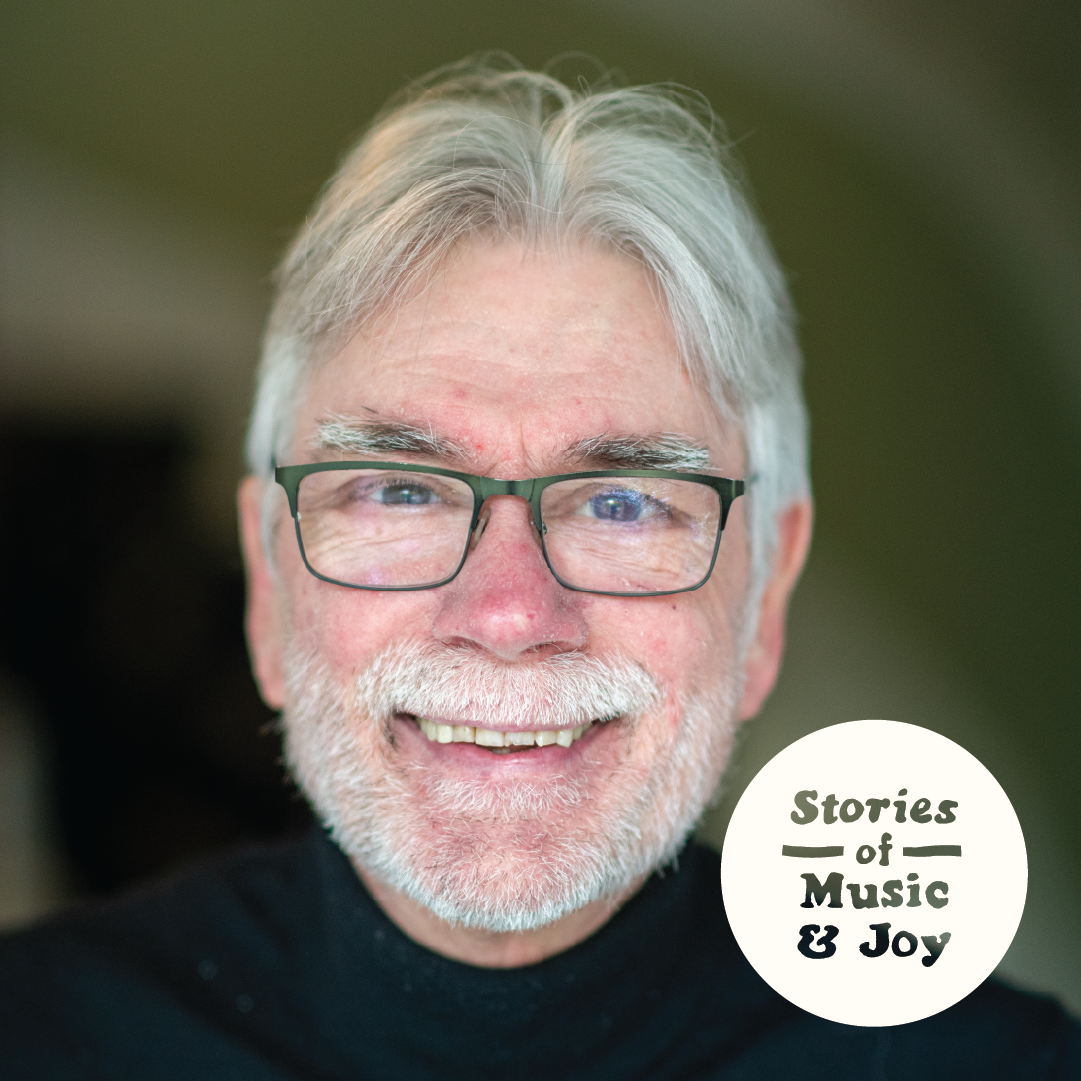
Bear Irwin

Our tenth anniversary is a time to reflect on the amazing community that has grown up around the yellow house at 6 Main Street. One of our very first faculty members was Bear Irwin, a multi-hyphenate instrumentalist and educator who has been a pillar of the Middlebury Community Music Center (MCMC) community from its early days.

Bear has been a music educator in Vermont since 1970, and is an accomplished jazz performer and band leader. Bear’s path in music education began as the only public school music educator serving seven schools in northern Vermont, teaching classroom, vocal, and instrument music in grades K through 12. He remembers the early days as a teacher when he “taught every instrument…. Every wind instrument and every percussion instrument, and early on, even all the string instruments.” He caught a lucky break early on, when the school board voted to hire two more music educators. This expansion allowed Bear to specialize in instrumental music instruction, which eventually led him to MCMC.

Reflecting on his path in music, Bear says that “it was by Sadie's invitation to join [MCMC], and that has made all the difference” in his career as an educator, and in the growth of MCMC. In those early days of the Center, most of the students were either taking piano lessons or voice lessons. Bear brought an expertise that expanded the range of offerings of the center not only to different instruments, but also to ensemble-focused classes, jazz, and improvisation. 

For Bear, the goal of his teaching is to make a deeper impact in the lives of his students. He shares in the belief of MCMC that “our objective as music educators… is helping people to involve the arts in their lives as they become adults.” 

An integral part of MCMC since the early days, Bear has seen the center change and grow in a number of exciting ways. He has witnessed the dramatic increase in staff and administrative support, all while prioritizing the student experience. “We have really wonderful faculty here now. And I think we provide great educational opportunities for students in every area of music, every aspect of music.”

These opportunities have proven to be life changing for some of Bear’s students. He has seen students accepted into conservatory programs and pursue a professional career in the arts. He believes that “all of the students who go through [MCMC] are very successful in finding a way to include music in their lives as they mature into adulthood.” However, he also has noticed how the presence of MCMC has changed not only individual lives, but the community as well. MCMC, for Bear, is engaged in a project of “extending the arts out into the community, expanding the opportunities that are available” for all members of the community to be transformed by the arts.

This collective transformation is inherent to the art of music, according to Bear. “Music and drama involve that collegiality… We like to make music with others and for others.” In this way, music is oriented differently than other types of artistic expression. And for Bear, the art and practice of performance is a way of making connections and giving back to the community.

With MCMC approaching a decade of serving the community, Bear can see the challenges that lie ahead for the organization. “We’re expanding our educational opportunities,” he says, and to meet that need MCMC will have to provide “the facilities [to] meet and match the curriculum, the faculty, and the participants.” One solution that MCMC has found to this has been to foster relationships with community partners that provide additional spaces for performance and programs.

However, Bear still finds something musical and exciting about hosting lessons in the original building, symbolized by the cacophony of sounds emanating from the house on Main Street during peak hours of lessons and events. “When you hear that sound of every room… engaged in the activity of music and music education, it’s a very real indicator of the success” and growing community.

Bear’s vision of the solution to this challenge reflects his journey from a solo music educator in Northern Vermont to his indispensable role in the MCMC community today. For Bear, everything comes back to the “ensemble.” Learning to listen to your environment and respond to the musical expressions of others with your own creative gesture is a practice that extends far beyond a lesson or afterschool group. MCMC’s ensemble cast of talented teachers and motivated students will see it through its many transitions for years to come.  

In celebrating ten years of MCMC, Bear knows that there is “lots to be proud of there.” Bear credits the founding vision and leadership of Sadie Brightman as promoting the tight-knit relationship between the center and the surrounding community. This unique collegiality and sustained outreach builds relationships that have not only lasted a decade, but continue to deepen and expand out to new horizons. 

Driving home after lessons, Bear takes a moment to reflect on the motivation of his students and the “joyous” environment that musical connection generates. MCMC and Bear know that motivation can be infectious, and that music builds and sustains community precisely through joy.

Stories of Music & Joy: The Pickens Family

Photograph by Caleb Kenna

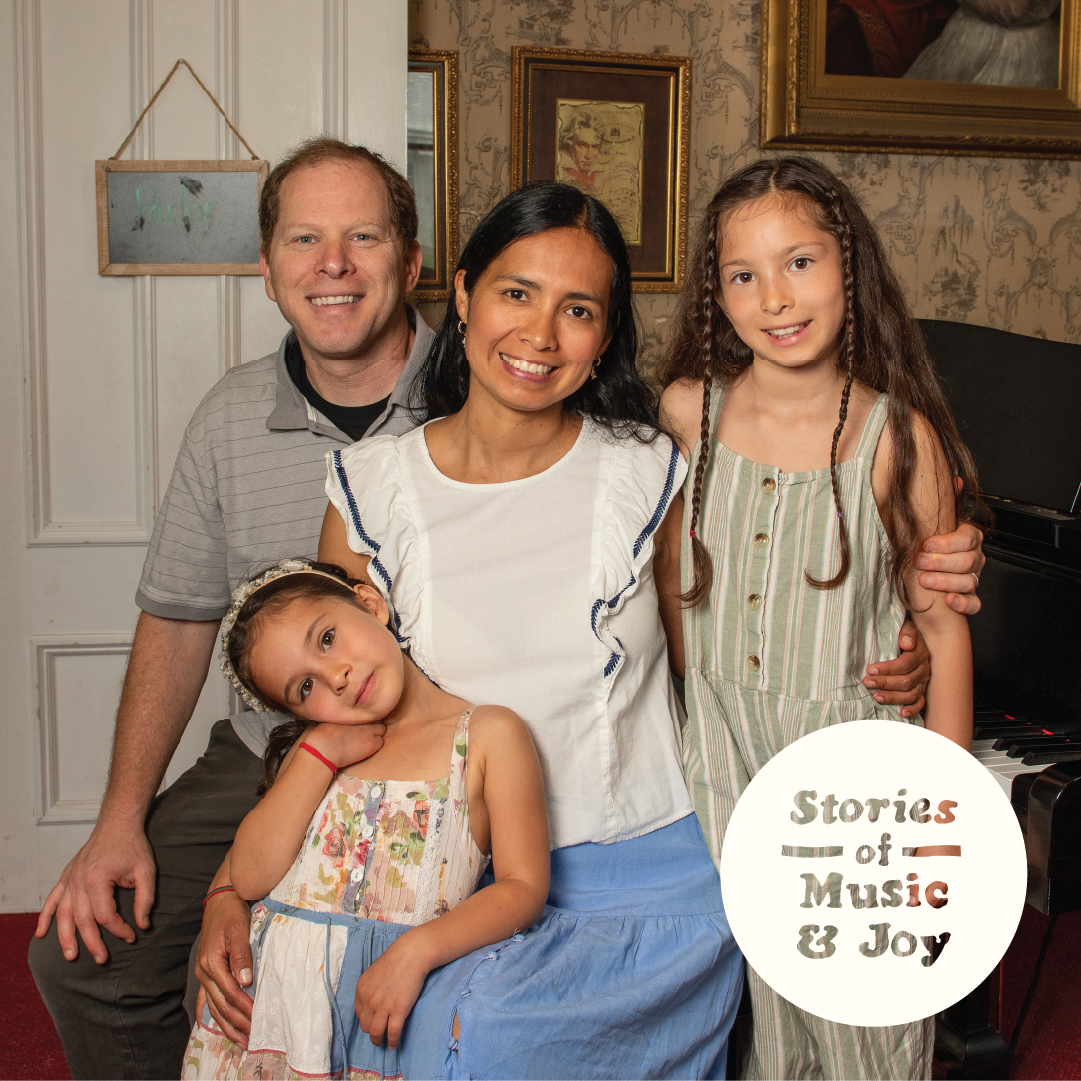
The Pickens Family
Zim, Sophie, Rowan, and Willa

In its ten years, the Middlebury Community Music Center (MCMC) has built a thriving community of music makers and lovers. Students of all ages and skill levels have gathered at the house on Main Street to enrich their lives and the lives of their loved ones. For the Pickens family, music lessons at MCMC have become a point of connection and motivation for all. Zim, Sophie, and their kids Rowan and Willa are inspiring examples of the ways in which music, and MCMC, can be integrated into a family unit.

Zim and Sophie both grew up in Addison County and knew of Sadie Brightman as a talented musician. When they returned to Vermont as adults, Sadie was well on her way to building MCMC into what it is today. It offered a hub of teachers and a diversity of instruments and reminded Zim of the inspiring performances that Sadie had given when they were growing up together. Zim and Sophie were excited to sign up Rowan and Willa and support Sadie’s vision.

However, both Zim and Sophie had their own regrets about music lessons from their own childhood. Zim wished he had taken music lessons earlier, saying “there was no MCMC back then.” Sophie had been tripped up by the technical challenges of learning to read music as a child, even though she really loved music and sounding things out by ear. Now, as a parent, she was concerned about exposing her kids to similar experiences that could risk turning them away from music.

What Zim and Sophie found at MCMC was a nurturing environment that supported their kids through the frustrations and challenges of learning music. Additionally, MCMC provided a community that celebrated everyone’s progress across a wide range of ages and skill levels. Some of the family’s favorite elements of MCMC are the homey details of the house and its decor, which add to the welcoming environment.

Welcomed into the MCMC community as parents, Zim and Sophie both decided to take lessons alongside their kids. They reflected that this decision was incredibly humbling and helped them let go of some assumptions about what being an “adult” entails. By relinquishing a need for immediate mastery, their lessons took on elements of creative liberation and therapy. Sophie and Zim have both experienced their lessons as a catalyst for revisiting old limitations and fears and discovering new approaches to creativity and practice.

Zim has noticed that Rowan and Willa’s lessons have instilled a sense of agency and creative confidence in them. Rowan, who now can play melodies from movies and improvise on the piano, reflects that music is “something that makes me special because… I have a hobby to do and [can] play whenever I want to….It makes it feel like another unique thing I can do is to play music.” 

The whole family has been able to share in this creative confidence. One meaningful moment for them was when Willa discovered a monarch caterpillar in a field. Sophie had been working on a piece called “Metamorphosis” and was excited to share it with Willa in honor of her discovery. For the Pickens family, their collective commitment to practice and sharing music has become woven into their daily lives.

Taking lessons at MCMC as a family has helped Sophie and Zim get a different perspective on their parenting as well. Watching your children struggle through new skills, or push back against the requirements of a practice schedule can be a big challenge. Learning to find a balance between providing structure and remaining hands-off and trusting the process has allowed Sophie and Zim to discover new ways of connecting to and supporting their kids in their musical journey.  

Coming into MCMC for lessons creates a sense of support and community that inspires the Pickens family. Rowan likes hearing the sounds of all the different lessons happening around the building, and Zim notices how the space becomes a meeting place for a community connected through a passion for music - “it gives you a little sense that learning is happening and the notes are in the air. It just makes for a nice ambience that I find inspiring and uplifting.”  

The Pickens Family is also excited about the next chapter in the life of MCMC. They all see MCMC as an engine for fostering community through music. The children love the supportive atmosphere of the monthly performance salons and the parents see more informal gatherings like open houses as ways of activating their own interest in new kinds of music and instruments. 

In all of these ways, MCMC continues to foster a supportive and collaborative community for the Pickens family. This is what makes it a unique part of their life in Vermont. Sophie describes entering MCMC as “a different world,” and not just because of the vintage decor. It is a world committed to cultivating self-expression and creative exploration at any age. These experiences have lasting effects that are not just limited to the time spent in the MCMC. 

Now, Willa even wants to grow up to be a music teacher.